<?xml version="1.0" encoding="utf-8"?><feed xmlns="http://www.w3.org/2005/Atom" ><generator uri="https://jekyllrb.com/" version="3.10.0">Jekyll</generator><link href="https://www.wyattcraymond.com/feed.xml" rel="self" type="application/atom+xml" /><link href="https://www.wyattcraymond.com/" rel="alternate" type="text/html" /><updated>2025-06-07T09:50:43+00:00</updated><id>https://www.wyattcraymond.com/feed.xml</id><title type="html">Wyatt C. Raymond</title><subtitle>Software Engineer, Veteran</subtitle><entry><title type="html">Before the Cock Crows Twice, You Will Deny Me Three Times</title><link href="https://www.wyattcraymond.com/cockcrows/" rel="alternate" type="text/html" title="Before the Cock Crows Twice, You Will Deny Me Three Times" /><published>2025-01-19T00:00:00+00:00</published><updated>2025-01-19T00:00:00+00:00</updated><id>https://www.wyattcraymond.com/cockcrows</id><content type="html" xml:base="https://www.wyattcraymond.com/cockcrows/"><![CDATA[<p>It has been almost three years since I have decided to start a personal blog, and only just now am I making a public declaration of my faith in Christ on the internet. I was born and raised Catholic but it has not been until relatively recently that I have begun to reflect on what God has done for my family and I and what he continues to do for every one of us. It is also recently that I have begun to really wonder why I have been so hesitant to speak publicly about my faith and why I seemed to think it was necessary to separate my religious beliefs from my personal and professional interests.</p>

<p>One of the events detailed in the Gospel according to Mark is how Jesus tells Peter that he will deny him later when the authorities and crowds begin to ask and accuse him of associating with himself. Peter replies that he would never do any such thing, but we don’t have to read much further to see that as always. Jesus was correct. I am no theologian, so I will spare everyone a long-winded interpretation of the scripture, but what I really want to convey is that I feel that I have been tested and failed (will most likely continue as well) many times in my own life just as Peter was.</p>

<p>It is no secret that modern western culture has a not so high opinion of Christianity, and that those who are considered to be “religious” can also be assumed to be ignorant or uneducated. Christianity seems to have become the safe topic of many jokes and it is openly accepted, some would say encouraged, to disparage the Church of Christ and his followers. This is really not surprising and one can find many examples laid out by Jesus himself saying that this will always be the case. I am blessed to not live in a country that openly commits genocide against Christians and it is a damn shame that there are countries today who do so against any group of people. But just because we are not being pulled from our homes and executed in the streets does not mean we are safe and sound.</p>

<p>As I mentioned earlier, I was born and raised in a Catholic family and spent the first 18 years of my life going to church every Sunday, and being involved with my parish as well. After leaving my home town and going off to college it only took about two years for me to sort of “lose interest” in my faith and stop going to church entirely. During this time, I always retained my Catholic upbringing as a part of me, but never was it something I was eager to share with others.</p>

<p>In the world of young professionals, it can be seen as odd or even “lame” to be labeled as a Christian, at least that was how I felt at the time. A fear of being marked as some kind of strange fundamentalist or boring prude was honestly (and still can be) a fear of mine. So, whenever the topic of religion or Christianity would come up, I would never openly deny or denounce God but I was never really in a hurry to back him up either. I was afraid of my own standing with other humans being lowered due to my association with Jesus, hmm where have we heard this before?</p>

<p>By the Grace of God, my wife and I returned to the church about three years into our marriage, and my life is surely better for it. My faith journey has and will definitely continue to be a long winding road and I am now reaching the point where I no longer feel the need to separate it from other aspects of my life. I will now conclude this post with the referenced scripture.</p>

<p>Mark 14:66-72
Revised Standard Version Catholic Edition
Peter Denies Jesus</p>

<p>66 And as Peter was below in the courtyard, one of the maids of the high priest came; 67 and seeing Peter warming himself, she looked at him, and said, “You also were with the Nazarene, Jesus.” 68 But he denied it, saying, “I neither know nor understand what you mean.” And he went out into the gateway. 69 And the maid saw him, and began again to say to the bystanders, “This man is one of them.” 70 But again he denied it. And after a little while again the bystanders said to Peter, “Certainly you are one of them; for you are a Galilean.” 71 But he began to invoke a curse on himself and to swear, “I do not know this man of whom you speak.” 72 And immediately the cock crowed a second time. And Peter remembered how Jesus had said to him, “Before the cock crows twice, you will deny me three times.” And he broke down and wept.</p>]]></content><author><name></name></author><summary type="html"><![CDATA[It has been almost three years since I have decided to start a personal blog, and only just now am I making a public declaration of my faith in Christ on the internet. I was born and raised Catholic but it has not been until relatively recently that I have begun to reflect on what God has done for my family and I and what he continues to do for every one of us. It is also recently that I have begun to really wonder why I have been so hesitant to speak publicly about my faith and why I seemed to think it was necessary to separate my religious beliefs from my personal and professional interests.]]></summary></entry><entry><title type="html">Uttering some Comments</title><link href="https://www.wyattcraymond.com/Comments/" rel="alternate" type="text/html" title="Uttering some Comments" /><published>2025-01-12T00:00:00+00:00</published><updated>2025-01-12T00:00:00+00:00</updated><id>https://www.wyattcraymond.com/Comments</id><content type="html" xml:base="https://www.wyattcraymond.com/Comments/"><![CDATA[<p>This is a pretty quick post, mainly just to notify any potential vistors that starting today you can leave comments on my posts!</p>

<p>These comments are powered by a neat little github app called https://utteranc.es/. All you need to do is login/create a free Github account and you can begin to share your opinions of my opinions! Utteraces is cool mainly because it is free and it syncs right up with Github(how I host my site). That is all for now!</p>]]></content><author><name></name></author><summary type="html"><![CDATA[This is a pretty quick post, mainly just to notify any potential vistors that starting today you can leave comments on my posts!]]></summary></entry><entry><title type="html">Exploring Satellite Decoding with Software Defined Radios (SDR)</title><link href="https://www.wyattcraymond.com/SDR-Project/" rel="alternate" type="text/html" title="Exploring Satellite Decoding with Software Defined Radios (SDR)" /><published>2024-10-16T00:00:00+00:00</published><updated>2024-10-16T00:00:00+00:00</updated><id>https://www.wyattcraymond.com/SDR-Project</id><content type="html" xml:base="https://www.wyattcraymond.com/SDR-Project/"><![CDATA[<p>The world of satellite communication is continually evolving, driven by the need for adaptable and cost-effective solutions. As we look to decode signals from weather and educational satellites, Software Defined Radios (SDRs) have emerged as a powerful and versatile tool. In my latest project at Old Dominion University, I explored the potential of SDRs to receive and decode satellite signals, offering a deep dive into the technology’s real-world applications. This blog post summarizes key findings and insights from my Master Project report, titled “Decoding Satellite Signals Using Software Defined Radios.”</p>

<p>Software Defined Radios (SDRs) are communication systems where the signal processing is largely handled by software instead of hardware. Unlike traditional radios that require physical components for signal modulation and demodulation, SDRs leverage software flexibility to process various signal types and frequencies. This enables quick adaptation to new satellite protocols, making SDRs especially valuable in the dynamic landscape of satellite communication.</p>

<p>SDRs are widely adopted for satellite communication because they allow for decoding signals from a wide variety of satellite systems without needing to replace hardware components. My project focused on receiving signals from NOAA weather satellites. Using a low-cost SDR device like the RTL-SDR dongle, I was able to process complex satellite signals, decode telemetry, and generate real-time weather imagery.</p>

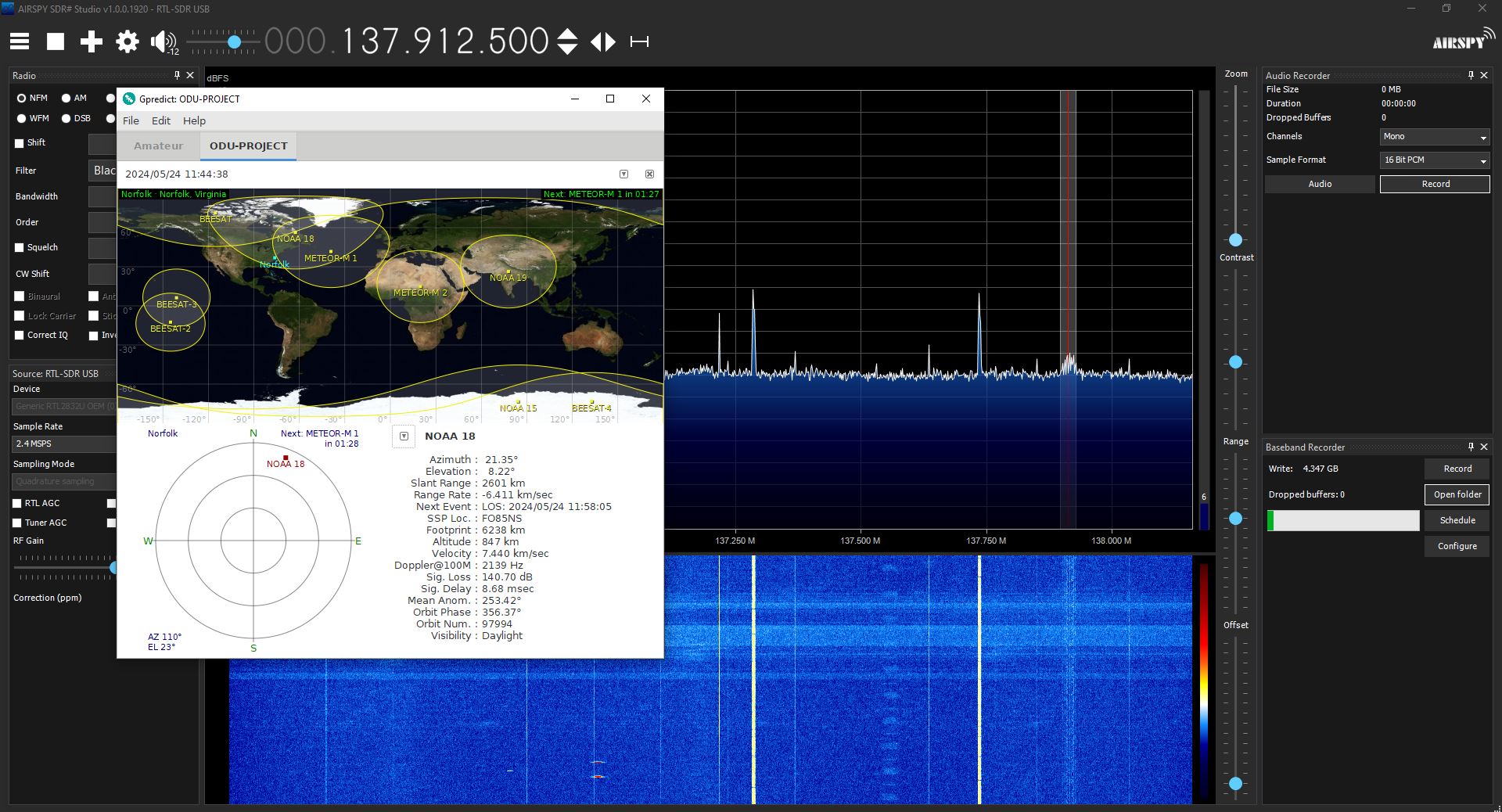
<p><img src="/images/noaa18may24th.JPG" alt="Gpredict and SDRSharp Software" />
<em>Gpredict and SDRSharp Software</em></p>

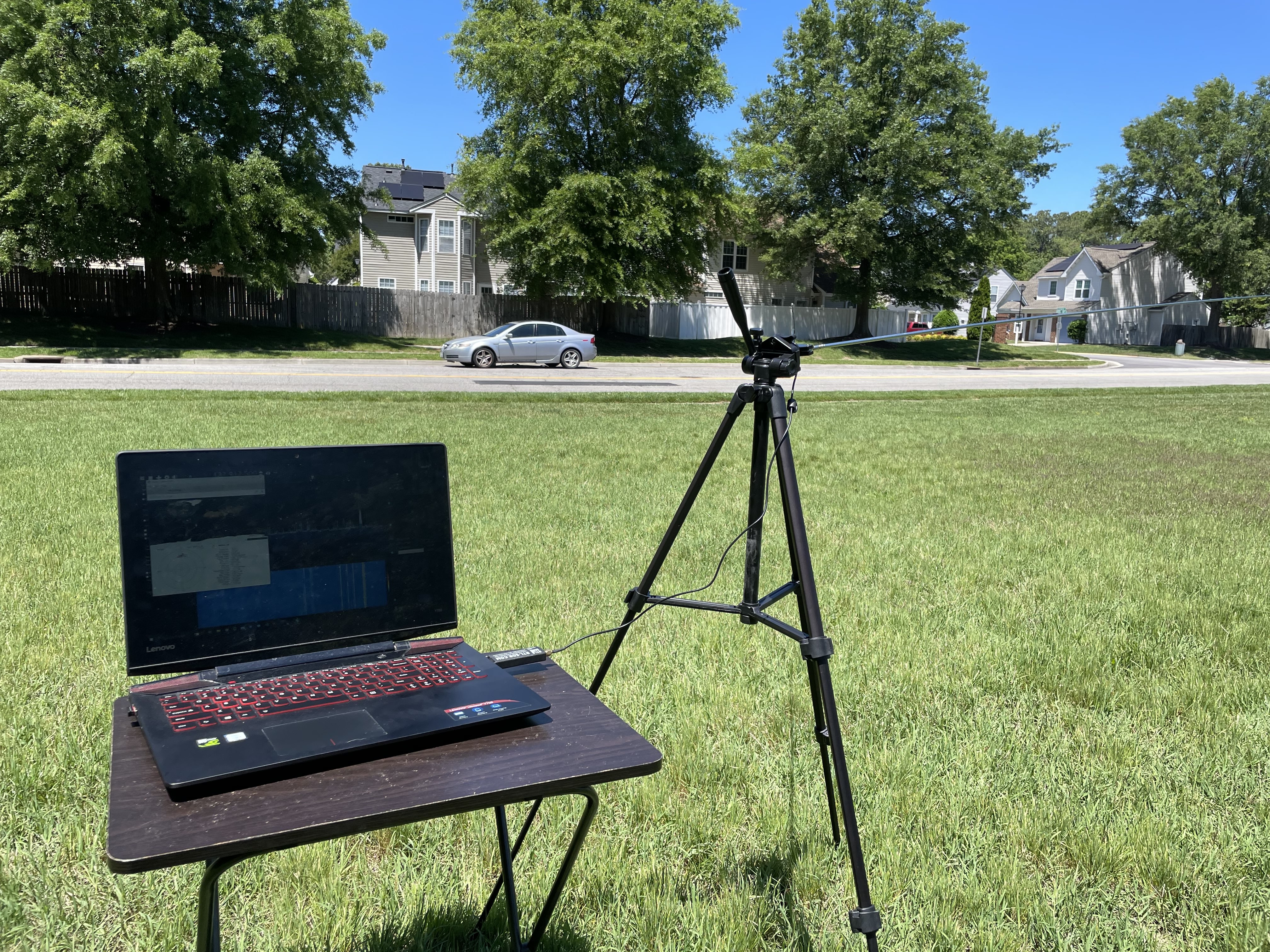
<p>The hardware setup for receiving satellite signals was minimal but effective. I used an RTL-SDR Blog V3 dongle connected to a simple dipole antenna. Paired with powerful software like Gpredict for satellite tracking and WxToIMG for decoding, I was able to achieve accurate results in real-time. My experiments took place in a location where I ensured minimal obstructions for optimal signal reception. This simple yet powerful setup demonstrates how SDR technology can be accessible to both hobbyists and professionals.</p>

<p><img src="/images/SDR_SETUP.jpg" alt="SDR Hardware Setup using RTL-SDR Dongle, Dipole antenna and my laptop" />
<em>SDR Hardware Setup using RTL-SDR Dongle, Dipole antenna and my laptop</em></p>

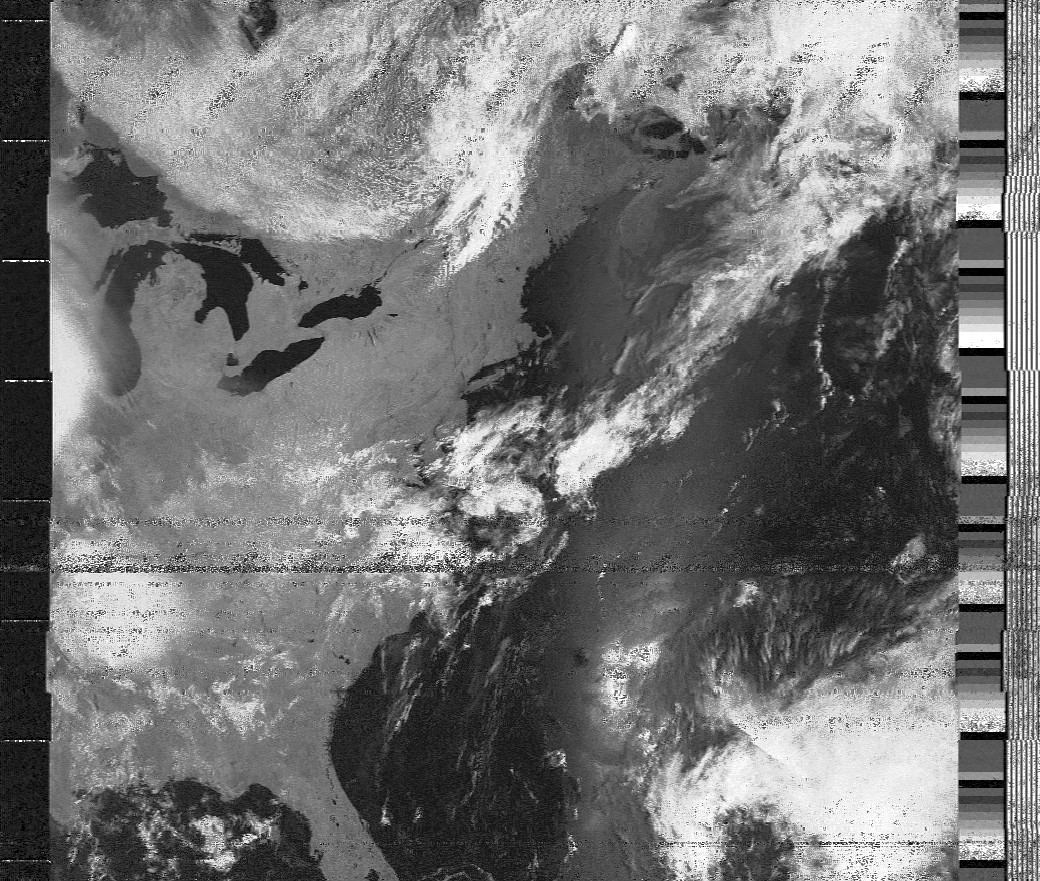
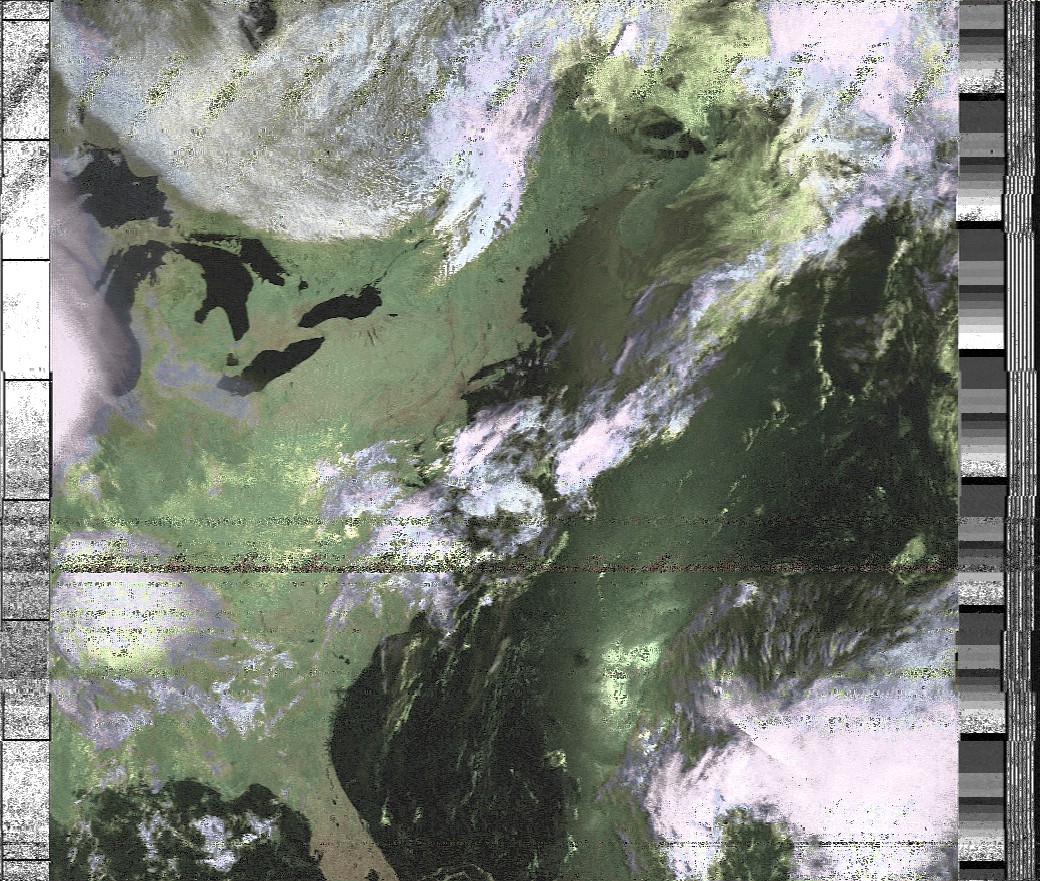
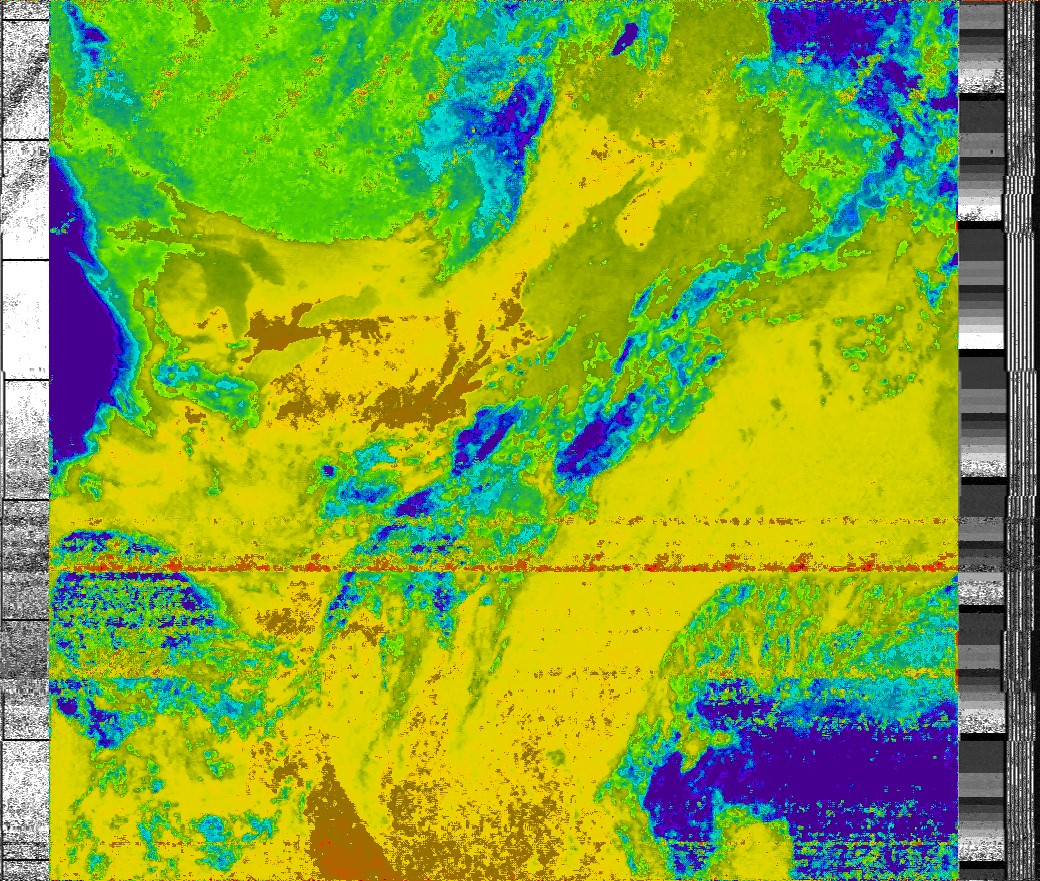
<p>The NOAA satellites, which are critical for weather forecasting, employ the Automatic Picture Transmission (APT) system to transmit low-resolution images of the Earth. During the project, I captured APT signals from NOAA 15, 18, and 19 satellites. Using the captured signals, I was able to decode and produce weather images with color overlays and thermal enhancements. SDR technology, coupled with software like SDRSharp and WxToIMG, allowed for seamless decoding of these signals.</p>

<p><img src="/images/NOAA19_24MAY_1000.jpg" alt="NOAA 19 Decoded Image" />
<em>NOAA 19 Decoded Image</em></p>

<p><img src="/images/NOAA19_24MAY_1000_color.jpg" alt="NOAA 19 Decoded Image - Color Filter" />
<em>NOAA 19 Decoded Image - Color Filter</em></p>

<p><img src="/images/NOAA19_24MAY_1000_thermal.jpg" alt="NOAA 19 Decoded Image - Thermal Filter" />
<em>NOAA 19 Decoded Image - Thermal Filter</em></p>

<p>The versatility of SDRs makes them an ideal tool for decoding satellite signals, and the potential applications extend beyond weather forecasting to include space research, environmental monitoring, and educational outreach. My project has shown that, with minimal hardware investment and open-source software, anyone can explore the exciting world of satellite communication.</p>

<p>As SDR technology continues to advance, I look forward to future innovations that will further streamline the process of satellite signal decoding and open up new possibilities for communication systems around the world.</p>

<p>For anyone interested in learning more, the full project report provides in-depth details on the setup, methodologies, and results obtained during my experiments. SDRs have proven to be a game-changing technology, and I hope this post inspires others to explore the field further! <a href="/ECE_698_Report_WyattRaymond.pdf">Report can be downloaded here</a></p>]]></content><author><name></name></author><summary type="html"><![CDATA[The world of satellite communication is continually evolving, driven by the need for adaptable and cost-effective solutions. As we look to decode signals from weather and educational satellites, Software Defined Radios (SDRs) have emerged as a powerful and versatile tool. In my latest project at Old Dominion University, I explored the potential of SDRs to receive and decode satellite signals, offering a deep dive into the technology’s real-world applications. This blog post summarizes key findings and insights from my Master Project report, titled “Decoding Satellite Signals Using Software Defined Radios.”]]></summary></entry><entry><title type="html">Tales from Grad School and Civilian Life</title><link href="https://www.wyattcraymond.com/Tales-from-Grad-School-and-Civilian-Life/" rel="alternate" type="text/html" title="Tales from Grad School and Civilian Life" /><published>2022-12-15T00:00:00+00:00</published><updated>2022-12-15T00:00:00+00:00</updated><id>https://www.wyattcraymond.com/Tales-from-Grad-School-and-Civilian-Life</id><content type="html" xml:base="https://www.wyattcraymond.com/Tales-from-Grad-School-and-Civilian-Life/"><![CDATA[<p>Well it has been a while since I posted an update on here, however that doesn’t mean I haven’t been meaning to post one, but as one can imagine the process of leaving the military, moving halfway across the country and starting a new career along with graduate school can be pretty time intensive!</p>

<p>I was originally planning on going to graduate school full-time, however after the idea of securing a paid assistant-ship seemed to be quickly fading away, I saw the writing on the wall and began to seek out some form of employment before my terminal leave from the military was used up. I was very fortunate to quickly be offered a flexible remote position after job searching for only several weeks. The position I am currently working can be classified more so as Software Engineering as opposed to traditional Electrical and Computer Engineering, so not quite what I went to school for initially, but close enough for now. I am definitely learning a lot through this position and while having a Computer Science background would have been helpful, I am managing to figure out most things on the job. This has definitely been made possible with the team I am working with and a solid team that you can collaborate with and depend on in the work place is not something that should ever be taken for granted.</p>

<p>Back to my grad school escapades, I have just recently finished my first two courses in my ECE MS program and now I can remember why I was so ready to be finished with my undergrad education. Coming back to academia, especially in a technical field, after being away for about four years definitely hit my brain like a firetruck. There were several nights were I was struggling through homework and projects that I felt a fair amount of regret for starting down this higher education rabbit hole and how I would have probably been better off just focusing on my professional career alone. However despite the truthfulness these moments of doubt may hold, as my first semester comes to a close, I am still glad I embarked on this journey.</p>

<p>I am satisfied with how things have turned out in my transition from the military for there are important things that I can take away from both my current professional position and my academic experience as well. While my software engineering, more specifically web development, job doesn’t quite line up with my academic credentials, it is still giving me valuable technical work experience that I seriously lacked upon my exit from the army. It is also nice to be able to round out my skills with concepts and tools not normally used in the traditional electrical/computer engineering space and learning a lot about the professional working environment that is not really covered in an academic environment. My masters program is also giving the opportunity to brush up on the many theoretical skills that I have long since forgotten since undergrad and should greatly assist me in pivoting back into the more traditional engineering fields if I so desire, but either way I don’t think having an MS in electrical engineering on a resume ever hurt anyone either.</p>

<p>All in all, It has definitely been a crazy half a year since leaving the military, but a great start nonetheless. I look forward to continuing my personal growth as a technical professional and maybe writing some more blog posts in a more consistent manner in the future. Until next time!</p>]]></content><author><name></name></author><summary type="html"><![CDATA[Well it has been a while since I posted an update on here, however that doesn’t mean I haven’t been meaning to post one, but as one can imagine the process of leaving the military, moving halfway across the country and starting a new career along with graduate school can be pretty time intensive!]]></summary></entry><entry><title type="html">My Last Week In The Army</title><link href="https://www.wyattcraymond.com/My-Last-Week-in-the-Army/" rel="alternate" type="text/html" title="My Last Week In The Army" /><published>2022-05-23T00:00:00+00:00</published><updated>2022-05-23T00:00:00+00:00</updated><id>https://www.wyattcraymond.com/My-Last-Week-in-the-Army</id><content type="html" xml:base="https://www.wyattcraymond.com/My-Last-Week-in-the-Army/"><![CDATA[<p>Today begins my last week as a commissioned officer in the active duty US Army. I will have served a total of four years as an Air Defense Artillery Officer. My time in service has been relatively tame compared to most, only having served in the States and not having to go over seas. However, I must say that I am ready to be moving on to other things, but my time in uniform will always be something I will appreciate.</p>

<p>I will start with a quick summary of my stint as an Army Officer. I studied at the Virginia Military Institute and graduated with a BS in Electrical Engineering and commissioned as an Air Defense Artillery Officer. Following graduation I made my way to Fort Sill OK for my initial officer schooling which was then followed by my first permanent assignment at Fort Hood TX. While stationed at Fort Hood I was a platoon leader in a PATRIOT Air Defense Battalion where I was in charge of a group of around 25 soldiers. I became fairly proficient with the weapon system and also became one of my Battery’s principal trainers only after about a year on station. After spending two years in a broken record training cycle, I decided I have had enough of playing space invaders and decided to go back to Fort Sill to work for the Basic Training Brigade. After a very dramatic couple of weeks where some field grade officers told me I was “dishonorable” for taking charge of my own life and career, I arrived at Fort Sill ready to ride out the rest of my four year commitment. My position at Sill was a Battery Executive officer and I basically handled most of the administrative tasks for the Command Team and Drill Sergeants. It was not a sexy job, but it was predictable. I tried to give the Army one more chance by submitting a packet to transfer to its Network Engineering branch, but despite my relevant degree and certifications the board couldn’t seem to get over the spiteful evaluation written by my former unit. Shortly after hearing back I had my resignation filled out and submitted. About seven months later I am now here writing this blog post, waiting to be able sign at for the last time at the end of the week.</p>

<p>I could go on and on about why many junior officers decide to leave the military service after a short tenure, but I would be beating a dead horse. Most of the same reasons have been written about time and time again by others; more predictability, more time with family, more career flexibility and so on. Most of these factors that many others have described do in fact describe me, so I do not really consider myself special or unique, in fact I’m relieved because I seem to be in good company. So instead I will take this time to write about the parts of military officer-ship that I, Wyatt Raymond, personally despise the most.</p>

<p>The first thing that comes to mind when I reflect on what I can’t stand about the military is how arrogance seems to be often one of the most highly rewarded traits of military leadership. I understand that military leaders must possess a high level of confidence to be able to inspire their subordinates and convince their superiors of their competence in order to accomplish challenging missions. But in my short time in service I have seen these “A-type Personalities”(another word for asshole in my opinion) prance around the unit boasting of their skills and intelligence only to be revealed as competent or maybe less so than the “rest of us”. However despite their performance being no better than others who choose to practice a little bit of humility, superiors are usually quick to hold them in higher regard for seemingly superfluous reasons.</p>

<p>So it is these self proclaimed A-types who more often than not get the better “potential” evaluations from a “senior rater”, who hardly knows them in the first place, go on to “succeed” in the military. Thus the cycle continues and they become the said leaders who will continue to encourage arrogance. One can say that of all professions, one that requires someone to lead others to confront and kill the enemy should have leaders who are confident and borderline arrogant, and I would probably have to agree. Just because I don’t like something about the military doesn’t mean it is not in its best interests, all it means is that me and those who think like me will usually bail out at the soonest possible opportunity, so I guess it all works out in the end.</p>

<p>On the other end of the spectrum, there are a noticeable number of military officers(NCOs too, but for this writing I will stick to my peers) who are grossly incompetent. At the corners of every organization you can find a handful of junior officers who cannot be trusted to do the most mundane tasks just taking up space and creating more work for the rest of the unit. Because of the way the Federal Government employs its military, firing someone who is only “not good at their job” is incredibly difficult, borderline impossible. Those who get kicked out of the military before their contract or obligation expires normally have to do something criminal, and even that process is long and drawn out. So because of this, many officers will, either knowingly or unknowingly, figure out that all they have to do is show up(most of the time), and not break the law and they will be in no danger of losing their paycheck from uncle sam.</p>

<p>How the Army has grown to deal with this issue is they normally place these oxygen thieves in jobs of little or no importance so that they don’t run the risk of them dropping the ball on critical tasks. This sounds great and all except for the fact that these officers still take up manning slots, thus creating more important work for the average and above average performers. This will inevitably lead to those who do all the work to become burnt out and they will end up doing one of three things: Somehow work through the pain and continue to be a valuable member of the team due to only the sheer force of will, realize that their efforts are futile and that they can join the ranks of the do-nothings for the same amount of money, or leave.</p>

<p>When you combine this pool of incompetent officers with the arrogant ones I mentioned earlier, you don’t really have a promising pool to pick from to staff your senior leadership positions. This isn’t groundbreaking stuff, many others have written about this in far greater detail, and they will continue to do so as well. However similar to what I said earlier is that Uncle Sam requires a large stick to enforce his will onto the rest of the planet, if this staffing system seems to work, then so be it.</p>

<p>One particularly frustrating part of being a junior officer is the seemingly non-existent barrier to entry. From what I have seen ROTC programs will seem to take anybody! I had a peer in my BOLC class who gave a power point presentation that an 8th grader could have outdone. This was somebody who was supposedly college educated, what a joke! This has seemingly been happening for decades, because you go up to any random service member and ask them what they think about a 2LT, they will laugh and say something along the lines of “hurr durr, ya can’t spell lost without LT!” The entire reputation of our junior officer corps is forever stained as a group of grossly incompetent nincompoops, and the worst part is , they are not wrong! Some of the stupidest people I have met in my short time of service have been other Lieutenants and it has made mine and any other junior officer who’s worth a shit experience worse.</p>

<p>When any new LT shows up to a unit, they have to spend the first several months basically proving to their subordinates that they are either not a mouth breather or not a stuck up douche. For myself this really impacted my ability to sniff out leadership issues within my platoon and put a stop to them because I had spent four years being told “shut up and listen to your NCOs.” That may be good advice for those who are entering a unit who has working systems in place and strong leadership present, however those two things are not all that common in the “Real Army”. Why would anyone want to willingly become something so universally despised such as a Second Lieutenant? I guess for me personally it was so I could become “one of the good ones” but four years later I can now see that logic is highly flawed.</p>

<p>Okay…that was a lot of negativity, my military experiences were not all for naught though. I have been pretty lucky in my short time in the army, starting with the fact they paid for the majority of my undergraduate education. I also have never had to spend a long time away from my wife, something both of us were dreading before I joined. Perhaps one of the biggest factors is that very few other organizations take a baby faced 22 year old and place them in a team of 20 some people and immediately say “you are in charge now, figure it out.” I definitely learned a lot about both myself and how to work with and manage others from a variety of different backgrounds in ways that no other first post college job could have. So for that I am thankful. I have also met some stellar individuals during my time in service and have made friends with some of the funniest people that I would have otherwise have never met. What I have heard a lot is that “you will not miss the Army, bu t you will miss the people” and I wholeheartedly believe that. There were many Soldiers from my first duty station, Fort Hood, that I already miss and it makes me sad that I will probably never see them again, and I am sure I will have the same feelings about many people I have served with at Fort Sill as well. I am a firm believer that adversity will take complete strangers and turn them into the best of friends in short amount of time, and if you don’t get anything else from your time in the military, at least you have that.</p>]]></content><author><name></name></author><summary type="html"><![CDATA[Today begins my last week as a commissioned officer in the active duty US Army. I will have served a total of four years as an Air Defense Artillery Officer. My time in service has been relatively tame compared to most, only having served in the States and not having to go over seas. However, I must say that I am ready to be moving on to other things, but my time in uniform will always be something I will appreciate.]]></summary></entry><entry><title type="html">Why I Started Learning Linux</title><link href="https://www.wyattcraymond.com/Why-I-Started-Learning-Linux/" rel="alternate" type="text/html" title="Why I Started Learning Linux" /><published>2022-01-28T00:00:00+00:00</published><updated>2022-01-28T00:00:00+00:00</updated><id>https://www.wyattcraymond.com/Why-I-Started-Learning-Linux</id><content type="html" xml:base="https://www.wyattcraymond.com/Why-I-Started-Learning-Linux/"><![CDATA[<p>For this post, I will start with taking you back in time to the days of my adolescence. So when I was growing up in the early 2000’s, there was a seemingly on-going battle between Windows and Mac…and I grew up in a Windows house. My dad was a staunch Microsoft guy, and he was always raving about how great the “DOS Days” were. Naturally by the time I was old enough to be messing around with a computer of my own(an older desktop that my dad let me setup in my room), I was not using DOS but instead Windows XP. If you ask my father, Windows XP was the supreme Windows OS and it has all gone down ever since…but that’s besides the point. I remember growing into being a staunch Microsoft guy myself and I would routinely scoff at those who preferred to use their pretty little Macs(funnily enough I would go on to marry an Apple girl). For me the choice was simple, was I going to use a sleek and pretty but locked down OS like Macintosh? Or would I brave an OS that could be rough around the edges but would give me the freedom to change settings and configurations?(or lets be honest, allow me to play the majority of computer games)I had grown up being sold this bill of goods that Windows was for “the guy who knows what he is doing” and it should be the OS of choice for those who are serious about technology…oh how wrong I was.</p>

<p>I’m sure all of the Linux purists are laughing at me right now, but hey give me a break, some people are slower than others when it comes to seeing the light. I remember seeing that little penguin next to the Windows and Mac icons next to a lot of applications I would find on the world wide web, but I guess I just never really cared to pay much attention to it. Finally I learned that it represented this weird thing called “Linux” and I just chalked it up as an obscure brand of computers that was sold and distributed much like Windows or Macintosh.(really funny because of how Mac is based off Linux, but my young mind couldn’t have known that.) Linux would continue to fly under my radar until even after I began my undergraduate education in Electrical and Computer Engineering, for all the machines we used on a daily basis all ran on Windows (Windows 7 at that time).</p>

<p>It wasn’t until I started an internship with the Department of Defense after my sophomore year of college that I was truly exposed to Linux. I was given a laptop and told that I would be using this to complete most of the daily tasks in the lab I was assigned. I had booted it up and it was an OS that I had never really seen up close before. I was told that this was Ubuntu, a popular version of Linux, and that it was commonly used in technical environments to run all sorts of equipment. I remember just taking a couple of days and messing around with the GUI and realizing how fast and sensible it seemed. What also caught my attention was not just how fast and sleek and it was, but how easily configured everything was as well. Then I was taught about several basic commands as well such as “cd” and “ls” and the other basics that were needed to complete my menial intern tasks. Probably the coolest thing about that image of Linux on my system to me was that it came preinstalled with a Windows XP VM(also the first time I’ve used a virtual machine) that had space cadet pinball on it. whenever I had downtime in the lab(I had quite a bit) I would relive childhood memories trying to score extra balls.</p>

<p>After that internship, my interest in Linux had been piqued. When I found out that this OS was simply free to download and use, I became excited to go home and try it on my own system. I remember going home and downloading a version of Linux and storing it on a USB stick in which I then proceeded to try and install on a old laptop I had laying around the house. Needless to say, I’m pretty sure I bricked that laptop and my frustration led me to shelf my interest in Linux for a while.</p>

<p>Fast forward to about a year ago, almost three years after graduating college and not really doing a whole lot of computer engineering. I remember pulling out my old college laptop and trying to use it as a “garage computer.” It was running Windows 10, a free upgrade from its old OS Windows 7, and it wasn’t running very well. I had googled this issue and apparently Windows 10 just didn’t perform all that great when installed onto HDDs anymore, and it was a common issue that your HDD resources would be constantly running at 100% thus making your performance tank and basically be unusable. This really upset me, especially since laptops don’t make it too easy to crack them open and swap out the drive to an SSD. It wasn’t until after a couple weeks of having it sit lifeless in a corner that I figured this might be a good time to try my hand at Linux once again. Once more I downloaded an iso for LinuxMint and threw that on a USB stick, then proceeded to boot it up on my venerable machine. It wasn’t long until the new OS was installed and my computer was running like it was brand new again! It is pretty crazy how much baggage Windows carries around with it and the answer for most people is to just buy an SSD or install more RAM; but with Linux, all the fat is trimmed and only the things you need or want are present. It was liberating.</p>

<p>Now that I had a Linux machine myself, I began to dig into how it works and why so many individuals and companies seem to swear by it(it does come up on almost every job posting I have seen regarding computer engineering.) The more I read up, the more I realized, Linux is everything I thought Windows was when I was younger. Linux was the OS for people who knew what they were doing! It had been all along! I almost feel a little stupid for not getting into Linux before I did, but hey you can’t change the past, you can only prepare for the future. I have since purchased the “Linux Bible”, a hefty tome that claims to be “the ultimate guide to mastering Linux.” I guess time will tell. I have been slowly making my way through its numerous pages, it can be a bit dry admittedly, but still interesting. As I am ending my stint in the Army I feel that it is important for me to rebuild some of my technical skills and in this day and age, any self respecting technical professional should know their way around a Linux terminal. I may have been a late bloomer, but I have to say, it feels good that I finally came around…even if I still typed this blog post on a Windows machine…until next time!</p>]]></content><author><name></name></author><summary type="html"><![CDATA[For this post, I will start with taking you back in time to the days of my adolescence. So when I was growing up in the early 2000’s, there was a seemingly on-going battle between Windows and Mac…and I grew up in a Windows house. My dad was a staunch Microsoft guy, and he was always raving about how great the “DOS Days” were. Naturally by the time I was old enough to be messing around with a computer of my own(an older desktop that my dad let me setup in my room), I was not using DOS but instead Windows XP. If you ask my father, Windows XP was the supreme Windows OS and it has all gone down ever since…but that’s besides the point. I remember growing into being a staunch Microsoft guy myself and I would routinely scoff at those who preferred to use their pretty little Macs(funnily enough I would go on to marry an Apple girl). For me the choice was simple, was I going to use a sleek and pretty but locked down OS like Macintosh? Or would I brave an OS that could be rough around the edges but would give me the freedom to change settings and configurations?(or lets be honest, allow me to play the majority of computer games)I had grown up being sold this bill of goods that Windows was for “the guy who knows what he is doing” and it should be the OS of choice for those who are serious about technology…oh how wrong I was.]]></summary></entry><entry><title type="html">Hello World</title><link href="https://www.wyattcraymond.com/Hello-World/" rel="alternate" type="text/html" title="Hello World" /><published>2022-01-23T00:00:00+00:00</published><updated>2022-01-23T00:00:00+00:00</updated><id>https://www.wyattcraymond.com/Hello-World</id><content type="html" xml:base="https://www.wyattcraymond.com/Hello-World/"><![CDATA[<p>“Hello World!” Anyone who has done a lick of programming of any kind probably has these words burnt into their mind. The simple phrase “Hello World” really means so much more to those who have exposure to this school of knowledge. Not only are you simply greeting the planet on which we inhabit, but you are embarking on a new adventure in a brand new medium that you haven’t really explored yet. It is every programmers first foray into whatever new language or program they are currently exploring, they are truly the words of a new beginning.</p>

<p>That’s why I think Hello World is a suitable title for my first post, not only because it was the default title for this template’s first post (go figure) but because I truly beleive it encapsulates my begining in this new medium of blogging. A blog has always been something I have wanted to start myself but I here I am, freshly turned 25 years old and I am finally taking the plunge. You must know I am serious because I even paid for a custom domain name, how about that! So now with some skin in the game(about 14 dollars annually) I will now embark on this quest to share my opinions and insights to whoever cares to read them. I plan to post about topics relating to my interests in technology but every so often I may poke into other topics as well.</p>

<p>If you want to know a little bit more about my background, you can check out my About page. Until next time!</p>]]></content><author><name></name></author><summary type="html"><![CDATA[“Hello World!” Anyone who has done a lick of programming of any kind probably has these words burnt into their mind. The simple phrase “Hello World” really means so much more to those who have exposure to this school of knowledge. Not only are you simply greeting the planet on which we inhabit, but you are embarking on a new adventure in a brand new medium that you haven’t really explored yet. It is every programmers first foray into whatever new language or program they are currently exploring, they are truly the words of a new beginning.]]></summary></entry></feed>